Holiday Nog: Your Festive Night Cap
Have you grown up with eggnog as a traditional Christmas beverage? Maybe you still carry on the tradition. Perhaps you have had to let the tradition go because you cannot handle the dairy and eggs in eggnog anymore, either because you are lactose intolerant or because you have a dairy and/or egg sensitivity.
The good news is that there are new Vegan holiday nogs in the grocery stores to help you fulfill your ‘nog’ Christmas beverage. The bad news is if you have IBS (Irritable Bowel Syndrome) or SIBO (Small Intestinal Bacterial Overgrowth), you may not be able to tolerate these commercial holiday nogs because they have gums, carrageenan, and other thickeners in them that will set your gut off… and the last thing you want is your Christmas ruined because you have an upset stomach. More on SIBO at a later date but if you want to read a little about IBS or find out how you can get tested for SIBO, click here.
This homemade Holiday Nog recipe may feel better on the gut.
You can use a carrageenan-free almond milk and one that has very little fillers / gums or, better, make the almond milk at home. If you are using a store bought unsweetened almond milk, Silk and Earth’s Own are carrageenan-free. Earth’s Own has gellan gum and locust bean gum. The latter may be irritating to SIBO/IBS. Silk only uses gellan gum which is less irritating.
A can of full-fat coconut milk doesn’t have fillers or thickeners in it. I use Aroy-D coconut milk which has 99.95% coconut milk and coconut milk is FODMAP-friendly. It does have polysorbate 60 which can trigger IBS but only has 0.05% in the can and the recipe calls to use 3 tablespoons.
Leave out the maple syrup if sugars aggravate you or use Stevia if that feels better. The amount of maple syrup I used just gives it a very subtle sweet taste.
Cinnamon can be a warming spice and recommended in Traditional Chinese Medicine to help with bloating and loose stools. It also has hypoglycemic properties, meaning that it can help with blood sugar regulation. It isn’t a bad idea to add cinnamon to oatmeal or have cinnamon water to help support blood sugar regulation. *Cinnamon can trigger symptoms in those with mast cell activation syndrome or histamine intolerance.
Saffron gives it the pale yellowish hue of traditional eggnog. Saffron, known as Crocus sativus, is a predominant spice used in Persian, Middle Eastern and South Asian cooking in both savoury and sweet dishes. It is also used in Spanish paella! Due to saffron’s anti-inflammatory, neuroprotective, and neurotransmitter modulation actions, it can benefit gut health. An increasing amount of research has also shown saffron to mitigate depressive symptoms. Clinical research trials has shown saffron can be used as an effective natural treatment for mild to moderate depressive symptoms as it is comparable to the efficacy of conventional medications [1]. This makes saffron a great choice to add into your cooking during the Winter months when you may be more prone to seasonal depression (seasonal affective disorder). Yes, saffron can be expensive but you only need to use 1-3 strands in a dish. If you are curious about adding saffron as a therapeutic supplement, speak to your naturopathic doctor first to ensure it is the best option for you and safe with any medications you are on.
Holiday Nog Recipe
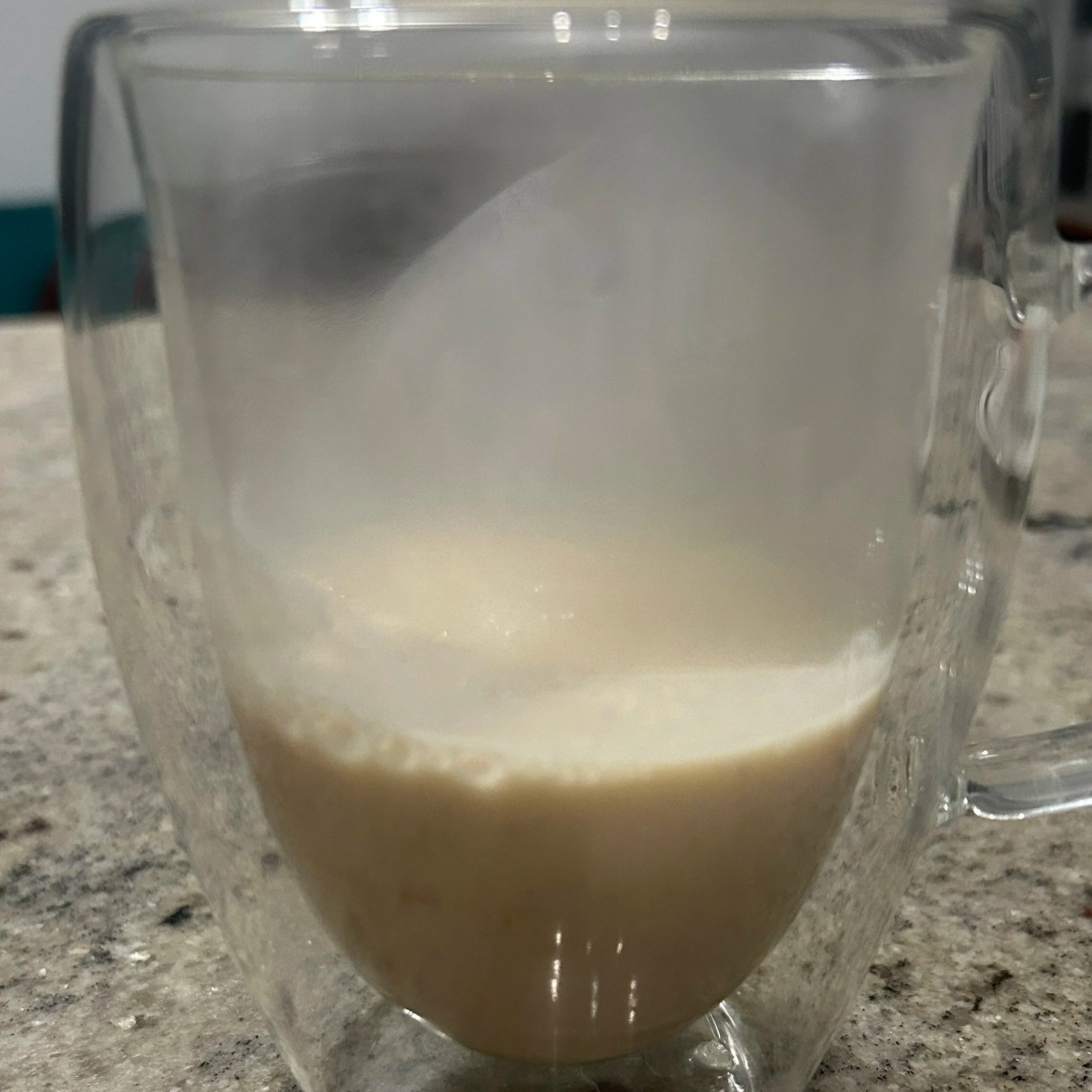
Ingredients (serves 1):
3/4 cup Silk unsweetened almond milk
3 tbsp full fat coconut milk
1/4 to 1/2 tablespoon maple syrup
Dash of cinnamon, to taste
1/4 tsp vanilla extract
1/4 tsp ground cardamom
1-2 strands of saffron
Method:
Mix all the ingredients together in a saucepan.
Bring to a boil on the stovetop and then lower the heat and let it simmer for 10 minutes, mixing frequently.
Pour into your fav glass or holiday mug and enjoy as an alcohol-free nightcap before bed!
It is a small, creamy amount for one person - perfect for a nightcap!
Reference:
[1] Chauhan, S., Tiwari, A., Verma, A., Padhan, P. K., Verma, S., & Gupta, P. C. (2024). Exploring the Potential of Saffron as a Therapeutic Agent in Depression Treatment: A Comparative Review. The Yale journal of biology and medicine, 97(3), 365–381. https://doi.org/10.59249/XURF4540