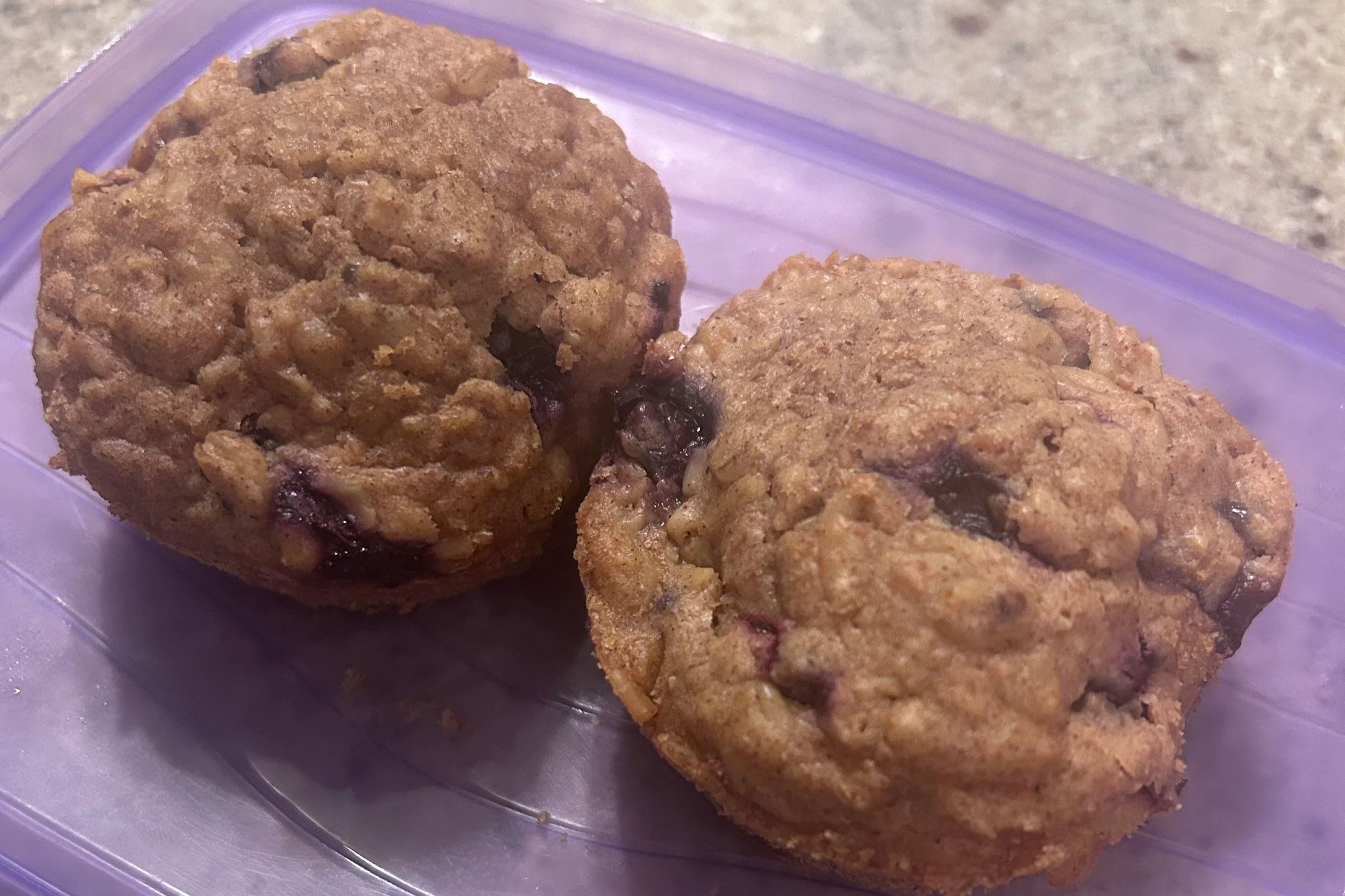
Fibre-Rich Blueberry Explosion Muffins
“Fibre” is the new “protein” for 2026! Just like you may be striving to get enough protein in a day, you also need to get an adequate intake of fibre in your day and believe it or not, the standard North American diet doesn’t give enough fibre. Canadian guidelines state that women should be getting 25g of fibre per day and men should be getting 38g of fibre per day.
Fibre is important as it helps contribute to satiety and helps to regulate blood sugar levels like protein and healthy fats. Other benefits of fibre include helping to lower cholesterol, and, promoting regularity, aiding to prevent constipation and supporting colon health. Fibre is broken down into two categories to help you achieve these benefits - soluble and insoluble fibre.
Soluble fibre is the type that has mucilagenous compounds which help to lower blood cholesterol by binding bile salts in your gut so they don’t get reabsorbed and your liver has to “suck” in more cholesterol from the blood to make fresh, new bile salts. Soluble fibre can also help reduce diarrhea because it can act as a bulking agent and can slow transit time. Foods with these are:
Oatmeal
Chia seeds
Flaxseeds
Beans such as lima, kidney, and navy beans
Lentils
Fruits – pears, peaches, apples, bananas, and dates
Some vegetables such as okra (the ones that are mucilaginous)
Insoluble Fibre is the type that helps promote bowel regularity, aids to prevent constipation and keeps your colon and gut healthy. This type of fibre also provides food for the good bacteria in the gut to keep them around because good bacteria help maintain a healthy gut and produce some vitamin B12, vitamin K and other vitamins.
Whole-grain foods
Brown rice
Vegetables
Beans and legumes
A Word on Fibre
Those with IBS may not tolerate high fibre foods because of gut irritation. This is why they feel better on a Low FODMAP diet (a diet void of fermentable fibres, starches, and sugars). This isn’t a diet that should be followed long-term as it doesn’t promote good gut health as you are not supporting the good bacteria in the gut. Often, those with IBS who cannot tolerate fibre, have SIBO (Small Intestinal Bacterial Overgrowth) or intestinal dysbiosis (bacterial imbalance) and the excess bacteria are fermenting the fibre resulting in gas and bloating , diarrhea or constipation. Working with a healthcare professional to eradicate the overgrowth and supporting intestinal motility helps individuals with IBS tolerate fibre again and don’t need to be on a restrictive low FODMAP diet long-term.
These fibre-rich muffins are not FODMAP-friendly because they are packed with fibre from oats, blueberries, and, whole-wheat flour.
If fibre irritates your gut, or, you are tired of being on a restrictive low FODMAP meal plan, a naturopathic deep dive assessment may help to determine if bacterial eradication and improving gut motility can improve your gut health and tolerability to foods.
Fibre-Rich Blueberry Explosion Muffins
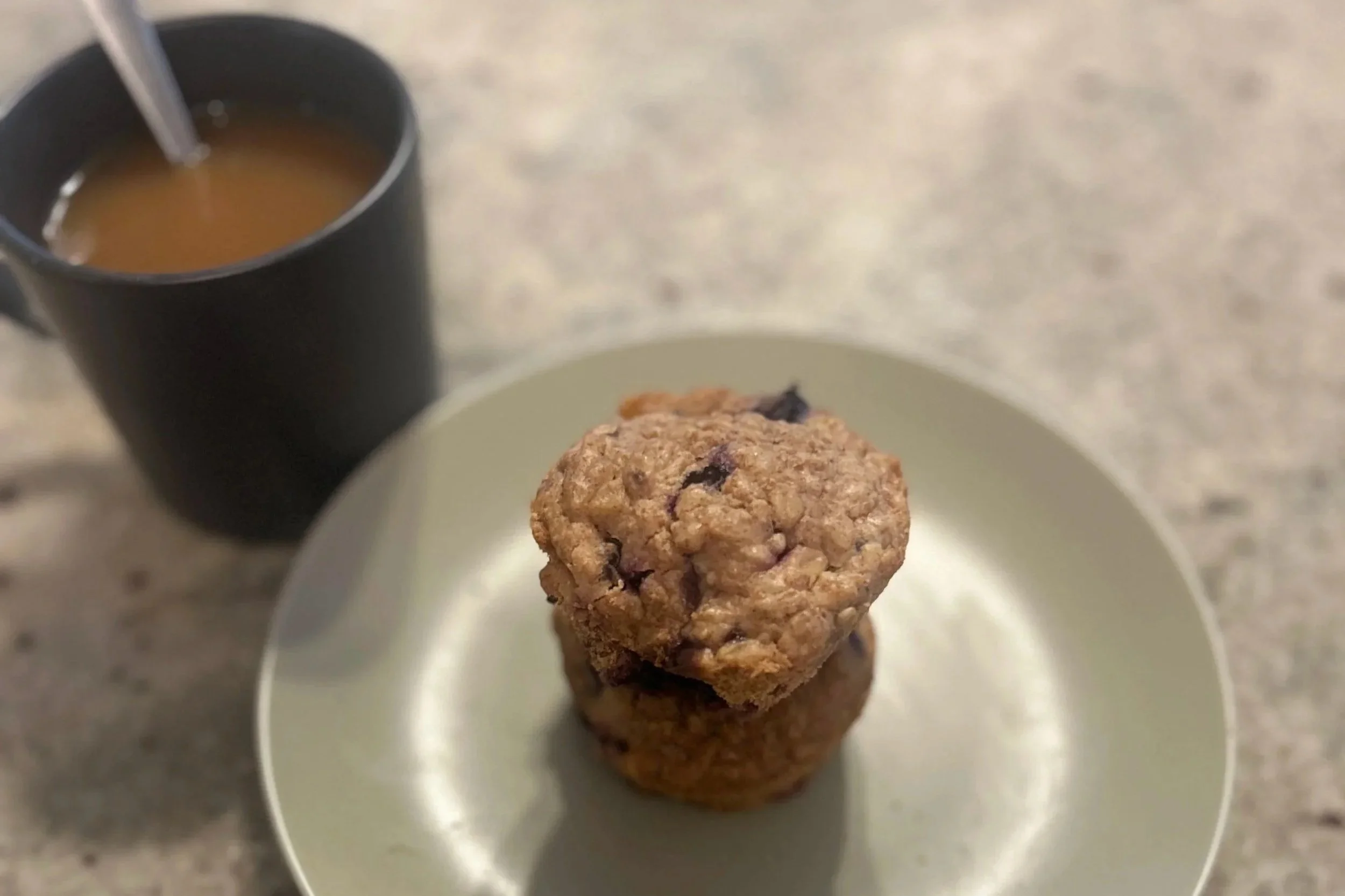
Ingredients (Makes 12 muffins):
1 ½ cups rolled oats
1 ½ cups unsweetened almond milk
1 cup fresh blueberries
1 tsp lemon juice
1 tsp vanilla extract
¼ cup grapeseed oil
¼ cup olive oil
1 egg
1 cup whole-wheat flour
2 tsp cinnamon powder
1 tbsp baking powder
1/3 cup coconut sugar
Method:
Add the rolled oats, almond milk, blueberries, lemon juice and vanilla extract to a mixing bowl. Mix ingredients together and let them sit for about 20-30 minutes. This allows the oats to soak and become soft.
Preheat the oven to 350 F. Grease a 12-cup muffin tin and set aside.
Once 20-30 minutes is over, give the rolled oat mixture a mix again.
Add in the oils and egg to the oat mixture and mix everything well.
Next, add in the whole-wheat flour, cinnamon powder, baking powder, and, coconut sugar. Mix everything until combined.
Once combined, add the mixture into the 12 muffin cups to an equal level.
Place in the oven and bake the muffins for 25-30 minutes, or until the muffins are golden brown and a fine knife inserted into the centre comes out clean.
Allow the muffins to cool in the tin for 3-5 minutes and then transfer them to a cooling rack.
These muffins can store for 7-10 days in the fridge.
You can eat the muffin on its own or spread some natural peanut butter on top and enjoy!